

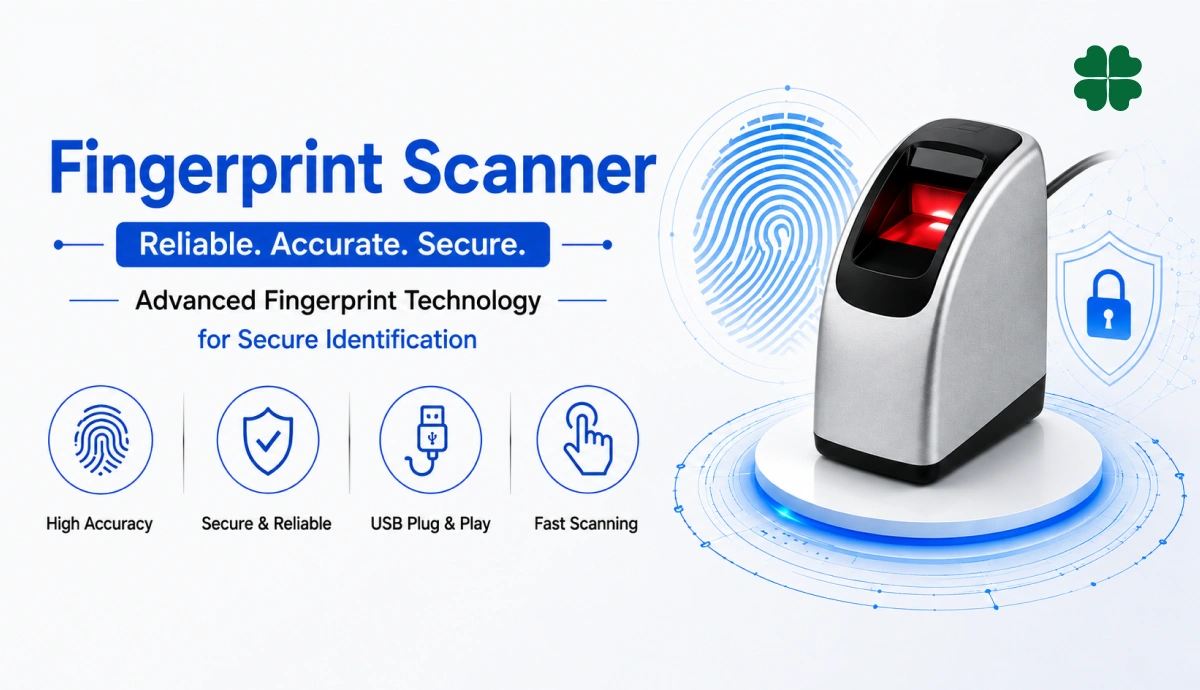
Selecting the best fingerprint scanner for your business is an important task for a Sewa Kendra or e-governance digital shop/kiosk. To make the best choice, it is important to understand the several industry standards and certifications that regulate biometric devices. The main objective of defining Biometric device standards and certifications is to ensure only quality biometric devices are rolled out in the market for enrolment and authentication agencies of the country. With Biometric certifications (India) guidelines, users can confidently buy certified and reliable devices that are safe and quick to operate.
In this article we will Guide to Biometric Devices Standards and Certifications provide you key information that will assist you in choosing a fingerprint scanner as per your needs while fulfilling the latest Biometric device standards. We’ll make you aware about the most important industry standards and Biometric certifications in India that guarantee the effectiveness of your fingerprint systems.
Standards and Certifications for Biometric Devices
In India, biometric device standards and certifications are mainly governed by the Unique Identification Authority of India (UIDAI) and managed by the Standardisation Testing and Quality Certification (STQC) Directorate.
UIDAI and STQC form the core certification framework. The UIDAI defines the safety and technical specifications for all kinds of biometric devices used in Aadhaar-enabled biometric devices for authentication services.
The STQC Directorate, a part of the Ministry of Electronics and Information Technology (MeitY), is the designated authority to test and certify these devices to ensure they meet UIDAI certification requirements. The Bureau of Indian Standards (BIS) also provides registration for some electronic components, such as optical fingerprint scanners.
Certifications of Biometric Devices in India have become a systematic process now. The manufacturers need to fully comply with them and the suppliers need to have sufficient systems and resources to support the use and deployment of the devices through the enrollment agencies. With mandatory certifications, the suppliers are able to provide Aadhaar-enabled biometric devices meeting UIDAI’s technological requirements.
Read Also: What are biometric devices & their types?
The Certification process via STQC
STQC works to protect trust for the users of the country. With STQC certification, people can rely and depend on the security and compliance of the biometric equipment. The STQC certification process is mandatory for the suppliers of biometric devices that are used for Aadhaar services and includes both hardware and software testing. Iris cameras and fingerprint image scanners used for enrollment and authentication devices are covered by STQC certification.
STQC ensures that only certified biometric equipment, such as fingerprint and iris scanners are used in India’s Aadhaar verification process.. This guarantees that the Aadhaar-enabled biometric devices work seamlessly and secure access to verification services across the country.
The STQC certification process has issued the guidelines that the supplier makes an application to the STQC Certification Body and submits a Technical Construction File (TCF) with the product information in detail. A STQC Biometric Device Test Lab (BDTL) then conducts a series of tests on the sample devices, such as functional testing, security testing, environmental and durability testing and image quality analysis.
The STQC authority first issues a provisional certificate after the initial tests that are successfully completed, which remains valid for up to 12 months. A field trial is carried out in an operational environment, including several tests for ascertaining the device efficiency on real-world performance metrics, such as False Rejection Rate (FRR). When the biometric device successfully completes all the testing cycles meeting UIDAI certification requirements, the STQC issues the Certificate of Approval, which is usually valid for three years.
BIS: Product safety and quality standards
BIS regulates the safety and quality of electronic goods that are sold in India. It is mandatory for certain biometric devices such as optical fingerprint scanners to be registered under the BIS Compulsory Registration Scheme (CRS) as per the standard IS 13252 (Part 1):2010. It is a separate, but mandatory, requirement from the UIDAI/STQC certification that guarantees the safety of the device.
Here are the CRS prerequisites that a manufacturer must meet to get BIS registration –
- Each brand or trademark needs its own BIS license.
- The license should be applied by the manufacturer and not by the seller or importer.
- Though a single license can cover the various models of the same product category, a separate license is required if the manufacturing address is different.
Meeting the Global biometric standards
Other than the organisational requirements from STQC, UIDAI and BIS, biometric devices in India are also required to follow international standards. The Indian e-Governance Standards and Guidelines have formally adopted some key international standards for data quality standard and interoperability. Standards like ANSI INCITS 378-2004 applicable for Finger Minutiae Format are used to make sure interoperability exists between the devices and systems. The ISO-19794-6 for Iris Image Data Standard is used to govern the capture, storage, and transmission of the iris images. The standards for the capture and storage of face images are also defined for verification purposes.
Why biometric device standards and biometric certifications (India) are important
When choosing biometric devices/ scanners for your sewa kendra or agency, it is important to check for required Biometric certifications (India) for efficient performance and security purposes. The standard and certifications are essential to guarantee the following aspects:
- Interoperability: Having systems that can record and transfer fingerprint data effectively is essential for large-scale applications like user identification and law enforcement. It is important to determine whether the scanner and its software meet your demands.
- Image quality: To make sure that the user identity and optimum system performance accurately match with each other, good quality fingerprint scan is very important. When you are aware about the various biometric device standards that determine their quality, it becomes convenient to select a fingerprint scanner as per your unique needs.
- Durability and security: Certifications guarantee the users that fingerprint scanners are compliant with rules for security and quality.
Conclusion
Wrapping up, the landscape of biometric devices in India is regulated by a mandatory multi-layered certification framework that is meticulously designed to ensure reliability, security and interoperability. The ecosystem of Biometric device standards is primarily governed by the UIDAI and STQC Directorate, with additional safety regulations from the BIS. The primary goal of the Biometric certifications India program is to provide the users of biometric devices an assurance that the certified devices are secure, reliable, safe, and compliant. Currently, the program covers Aadhaar linked devices for enrollment and authentication, such as iris cameras and fingerprint image scanners and seamlessly serve several financial services.